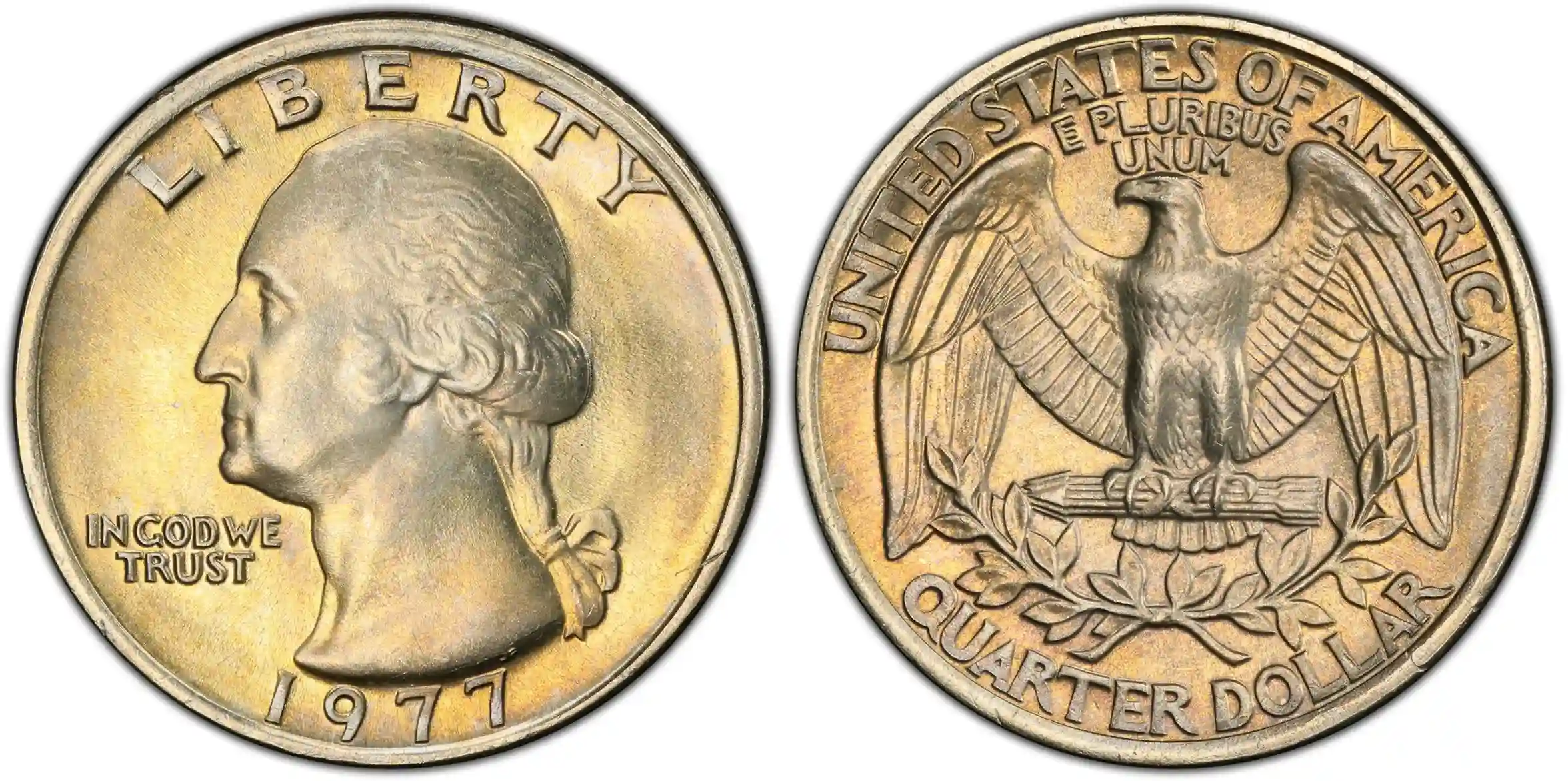
Geographic origin remains the primary driver of collector demand in the current fiscal year.
Identifying the most valuable quarters by year and mint mark on a coin often reveals a price difference of several thousand dollars.
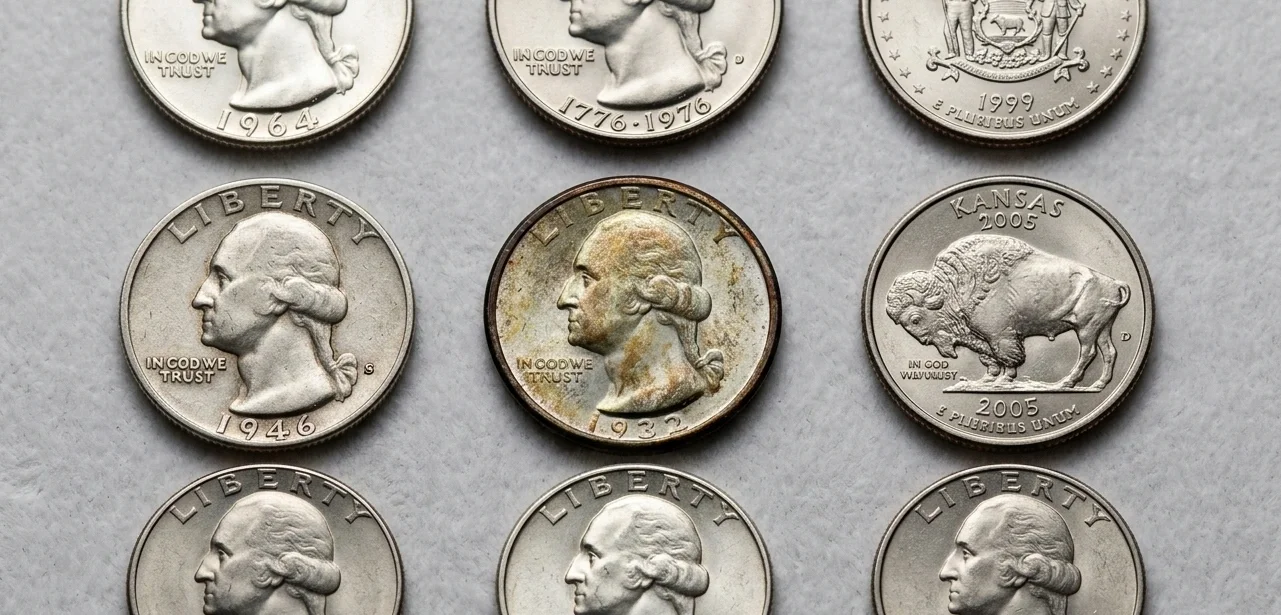
Component | Silver Quarters | Modern Clad |
Core Material | Copper | Copper |
Outer Coating | Silver | Nickel and Copper |
Standard Weight | 6.25g | 5.67g |
Edge Pattern | 119 Reeds | 119 Reeds |
Copper remains the heart of almost every US quarter, but the outer layer of Silver or Nickel defines its category.
Significance of Production Locations
Branch facilities often produced fewer coins than the main Philadelphia site.
Current Location Codes:
D — Denver (High demand for early dates)
S — San Francisco (Focus on premium quality)
W — West Point (Extremely rare circulation finds)
P — Philadelphia (Standard production, usually no mark before 1980)
Lacking a mark on a 1932 coin usually results in a significantly lower valuation than a D or S mark.
The 1932 Scarcity Matrix: A 2026 Perspective
Beginning the Washington series, the 1932 issue remains the gold standard for mint mark investing.
Denver and San Francisco produced less than 10% of the total volume compared to Philadelphia.
Comparative Market Data for 2026:
1932-D (Denver) → Mintage: 436,800 → MS65 Price: $14,500
1932-S (San Francisco) → Mintage: 408,000 → MS65 Price: $12,200
1932-P (Philadelphia) → Mintage: 5,422,000 → MS65 Price: $650
Finding a Denver mark in uncirculated condition is considered a top-tier investment achievement this year.
Value gaps between these marks have widened by an average of 4.5% since last year.
Analyzing the West Point (W) Phenomenon
Creating artificial scarcity in 2019 and 2020 changed the way modern quarters are collected.
West Point released only 10 million units per design directly into the general public's hands.
Investment Growth of W-Quarters:
2019-W Early Discovery → Initial Value: $15 → 2026 Value: $38
2020-W V75 Privilege → Initial Value: $20 → 2026 Value: $45
Searching through pocket change still yields these coins, though the probability has dropped to 0.01% in 2026.
Profit margins for "W" marks found at face value represent a return of over 15,000%.
Mint Mark Errors and Variety Premiums
Faults in the manual application of mint marks during the mid-20th century created legendary rarities.
Examining the letter via a coin scanner app free often reveals hidden layers of value.
Notable 2026 Error Prices:
1950-S Over D (OMM) → Clear S over a Denver D → Price: $3,100
1942-D Doubled Mark → Noticeable shadow of the D → Price: $850
1968-D "Missing D" → Rare die over-polishing error → Price: $1,100
Prices for these varieties remain immune to the fluctuations seen in common bullion markets.
Verification by a professional grading service is mandatory for these specific items.
The Impact of Physical Condition
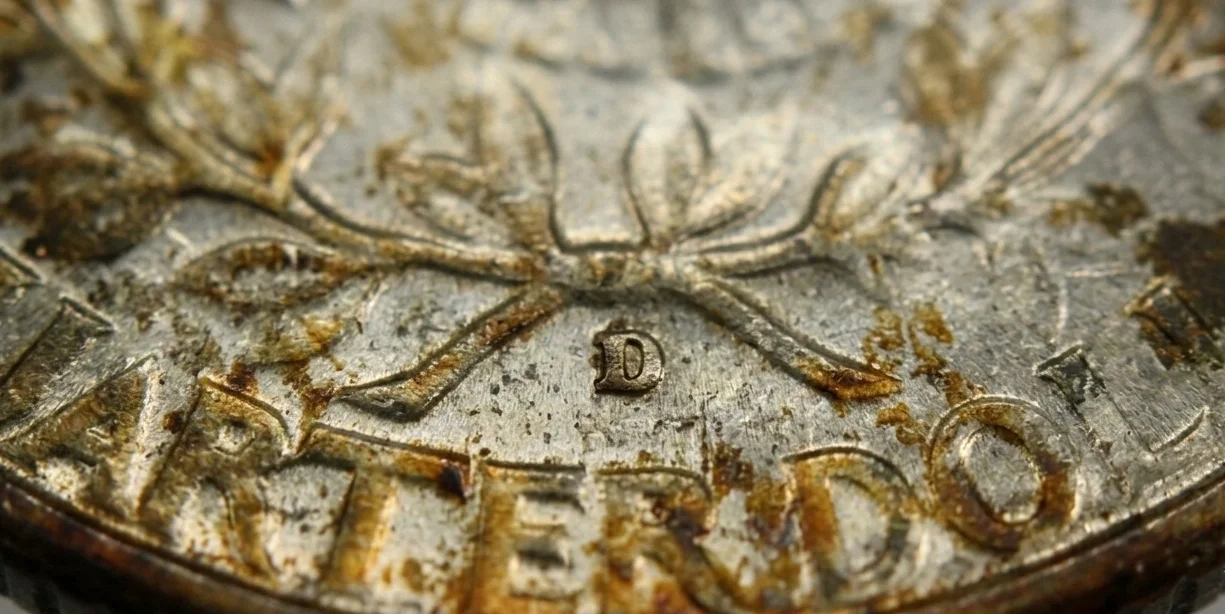
Small letters lose their premium if the surrounding metal is heavily damaged or worn.
Achieving a high grade on the 1-70 scale is necessary for maximum liquidity.
Depreciation Scale for 1932-S Quarters:
Grade MS66 → $18,500 (Museum Quality)
Grade MS63 → $5,900 (Choice Uncirculated)
Grade AU58 → $2,800 (Almost Uncirculated)
Grade F12 → $190 (Heavily Circulated)
Investing in anything below the AU58 threshold is generally discouraged for long-term growth.
Preserving the original luster around the mint mark is critical for the MS65 designation.
Strategic Acquisition in 2026
Purchasing from reputable auction houses ensures the authenticity of the mint mark.
Adding a rare "S" or "D" quarter to a portfolio provides a hedge against inflation.
Effective Search Methods:
Specialized Numismatic Auctions → Guaranteed authenticity but high premiums.
Bank Box Hunting → High time investment but extremely low cost.
Estate Sales → Occasional discovery of forgotten "S" mint collections.
Utilizing digital calipers and high-resolution cameras helps in pre-screening potential purchases.
Buying "raw" coins without certification involves significant risk due to clever counterfeits.
How to Authenticate a Mint Mark
Forgers often attempt to "glue" a letter onto a common Philadelphia coin.
Checking the area surrounding the mark via a coin appraisal app free usually reveals the fraud.
Authentication Checklist:
Surface Texture → The field around the letter should be smooth and consistent.
Metal Flow → Real marks show "flow lines" from the striking process.
Letter Shape → Each era used specific font styles for the "D" and "S".
Patina Match → The color of the mark must perfectly match the rest of the Silver or Nickel surface.
Detecting a seam or a line around the letter indicates a "vampire" or added mark.
Professional authentication remains the only way to secure a five-figure investment.
Modern Innovation and State Series Marks
Starting in 1999, the location of the mint mark moved to the obverse (front) of the coin.
Finding an "S" mark on a state quarter usually means it came from a special collector set.
State Series Value Ratios:
P or D Mark (Circulated) → $0.25 (Face Value)
S Mark (Silver Proof) → $15.00 - $25.00
W Mark (If applicable) → $30.00+
Collectibility of the 2009 Territory quarters has spiked due to lower mintage numbers for the "D" mark.
Each design requires a specific study of mintage figures to identify the true winner.